 Glucose sensor replacements
The project I'm proudest of helps people with diabetes
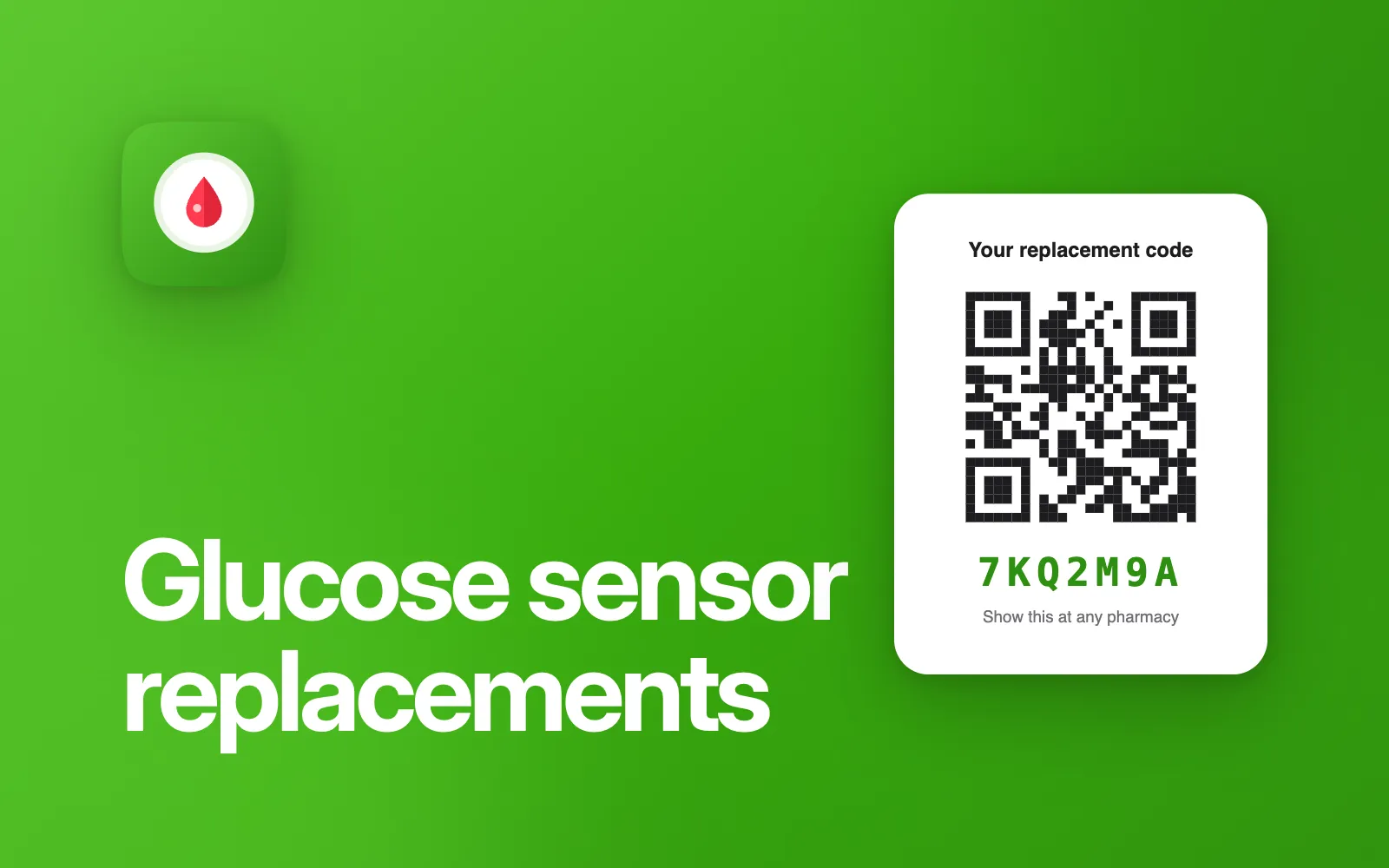
This summer, I built my first proper project for a real client. It’s been live since July, pharmacies across Kuwait use it, and it’s now issuing hundreds of replacement glucose sensors a month to people with diabetes.
The problem
In Kuwait, the government provides glucose sensors for people with diabetes, and they come from two suppliers. I built this for one of them.
Sometimes a sensor is faulty, and getting a replacement used to be a long process. You’d complain, get passed on to the supplier, wait for them to schedule a call, answer a list of questions, and then wait again for a new one to be delivered. For something people rely on to manage their blood sugar, that’s genuinely a matter of life and death. So the goal was to make it as easy as possible.
How it works now
You fill in a short form online, in English or Arabic, including the serial number on the box. The system checks it, then gives you a replacement code straight away, as a QR code, with a map of the nearest pharmacies.
Partner pharmacies keep extra sensors in stock, so the pharmacist just scans your code and hands you a new one. Behind it all, the supplier has a dashboard to see complaints and replacements over time, manage pharmacies and serial numbers, and change the form’s questions on their own.
1Report it The patient fills in a short form, in English or Arabic, with the serial number from the box.
2Get a code The serial is checked, and a replacement code comes straight back, with the nearest pharmacies.
3Scan it At any partner pharmacy, the pharmacist scans the code.
4Replaced A new sensor is handed over there and then.
Building it
It’s really three systems in one: a public form for patients, a portal for pharmacists, and a dashboard for the supplier. Pharmacists and the supplier each sign in, and each can only see and do what they’re meant to. It was my first time building sign-in and database permissions properly, and getting that right mattered a lot more here than on anything I’d made before.
I built it on my own in about ten days in July, with Next.js and Supabase, hosted on Vercel. This month I added a few things, like a map of the pharmacies and Arabic on more pages.
Why it matters
Hundreds of people a month now get a replacement through it, for something they rely on to stay healthy. Of everything I’ve made, this is the one I’m proudest of.